“Design without strategy is just decoration”
– Marty Neumeier
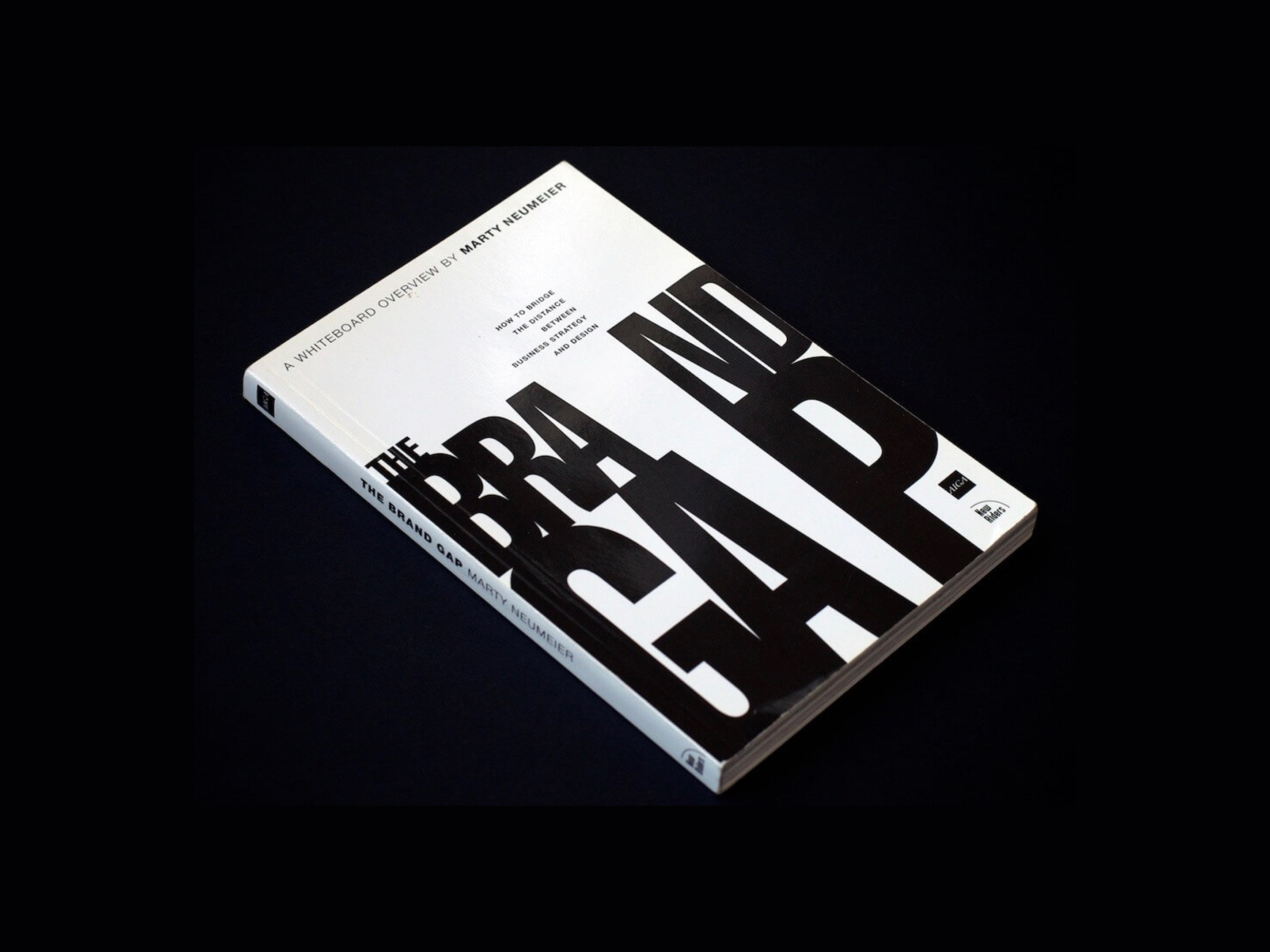
The Brand Gap, by Marty Neumeier, is a small book with a large impact. It is about building strong brands by closing the gap between business strategy and creative work. Designers should read it. Not because it tells you how to design, but because it shows why your design matters in a larger context.
1. The brand does not live in your files. It lives in their heads.
“A brand is not what you say it is. It’s what they say it is.”
A brand is not the logo, the colour palette or the website. A brand is the mental picture people have of a company, a product or a service. It is made by every interaction, small and large, from the first meeting to a long relationship.
That means everything we design helps shape the experience. Designers are not only form-givers. We build relationships, trust and identity.
Ask yourself: how do people experience what I made? What do they feel? Do they remember it?
2. Design is not decoration. It is strategy.
It is easy to think strategy is something “they” do, up there: management, marketing, the advisors. Neumeier is clear. Design is strategy.
Design is what makes strategy visible, understandable and felt. Through design, a vision gets a form.
“When strategy and creativity work together, brands become irresistible.”
We should stop separating design and strategy. Strong brands are built when the two work together, not as separate processes, but as one way of thinking.
3. Five disciplines for building a strong brand
Neumeier introduces five areas every designer should know:
1. Differentiation
What makes this brand particular? Why should people choose it?
2. Collaboration
How do the team, the leadership and the partners work together so the brand stays consistent and alive?
3. Innovation
How do we create value that meets people's needs and problems in a new way?
4. Validation
How do we test ideas and concepts early, so we know we are on the right track?
5. Cultivation
How do we let the brand develop with the market and the audience?
These five are not only for management. They are a map for how you, as a designer, can contribute strategically to the value of the brand.
4. The designer's role: from supplier to brand builder
In a traditional structure the designer is often seen as a supplier of output. Neumeier lifts a different role: the designer as a key person in the development of the brand.
“The brand is the gut feeling people have about a product, service, or company.”
Design is therefore not only how something looks. It is how it feels, how it is understood, and how it is remembered. Your job is to make the strategy tangible, human and relevant. That means asking better questions, and taking a seat when the strategy is formed.
5. How to use this in daily work
A few concrete moves you can start with:
Ask strategic questions at the start. What is the business aim of this project? What do we want people to feel, understand and do?
Use design as a test. Make simple prototypes that show the strategic choices. See how they work in practice.
Make a brand filter. Hold the design up against the brand strategy. Is it credible? Clear? Distinct?
See the brand as a whole experience. Do not only think about the surface you are designing. Think about the whole journey.
Join the workshops and the research. You gain insight, and you also shape the direction.
In short
The Brand Gap reminds us of something important. Building a brand is not decoration. It is influence. It is about understanding how people think, feel and choose, and how we can use design to create value, trust and clarity.
If you see yourself as a brand builder, not only as a designer, you take a step towards being a strategic partner in the team, not only someone who delivers. In a complex brand landscape, that is the kind of designer we need.
If you want to talk about this, or if you need help strengthening the strategic side of the design work, get in touch.