1. Money is about feelings, not only numbers
For designers, financial choices can look like something that belongs in the accounts department. Housel's point is that money is deeply personal. How we think about it is shaped by experience, upbringing and culture. That includes how designers price their work, choose projects and invest in their own development.
Money is a tool, not the goal.
Our financial choices are shaped by feelings and experience, not only by reason.
Short-term choices can be expensive in the long run.
2. The difference between being rich and being wealthy
Housel separates being rich from being wealthy. Being rich means having a lot of money now. Being wealthy is the freedom to do what you want later. For a designer, that can mean the aim is not always to earn as much as possible today. It can be a stable future, with room to choose creative projects without money pressing on every decision.
Riches are about how much you earn. Wealth is about how long you can keep your freedom.
A long-term plan gives safety, and room to do creative work.
3. Success is a long view
In design, as in money, it is tempting to chase a quick gain, whether that is a new project or a trendy look. Housel stresses the long view. A career or a company takes patience, and a willingness to make small, consistent improvements over time.
Small, regular improvements are stronger than large, sudden changes.
What creates value over time is discipline and staying power.
4. Do not compare yourself with others
Housel says one of the largest traps with money is comparing yourself with other people. Designers feel that too, the pressure to follow someone else's model of success or someone else's trend. People have different aims, different experience and different paths.
Do not measure success by other people's results.
Focus on your own values, and on what gives you meaning.
5. Uncertainty is part of the process
Life is full of uncertainty, in money and in creative work. Housel explains that accepting uncertainty can help us choose better. Instead of avoiding risk, we can learn to handle it.
Do not fear risk. Understand it, and handle it.
Flexibility lets you adapt when things change.
6. The value of simplicity
Finally, Housel argues that the simple strategies often work best. For designers, that can mean we do not always need the most complex or the most expensive solution. A simple idea, carried through, can be worth more than a complicated one that was never finished.
Keep it simple, in money and in design.
Complexity often leads to unnecessary mistakes and stress.
Conclusion
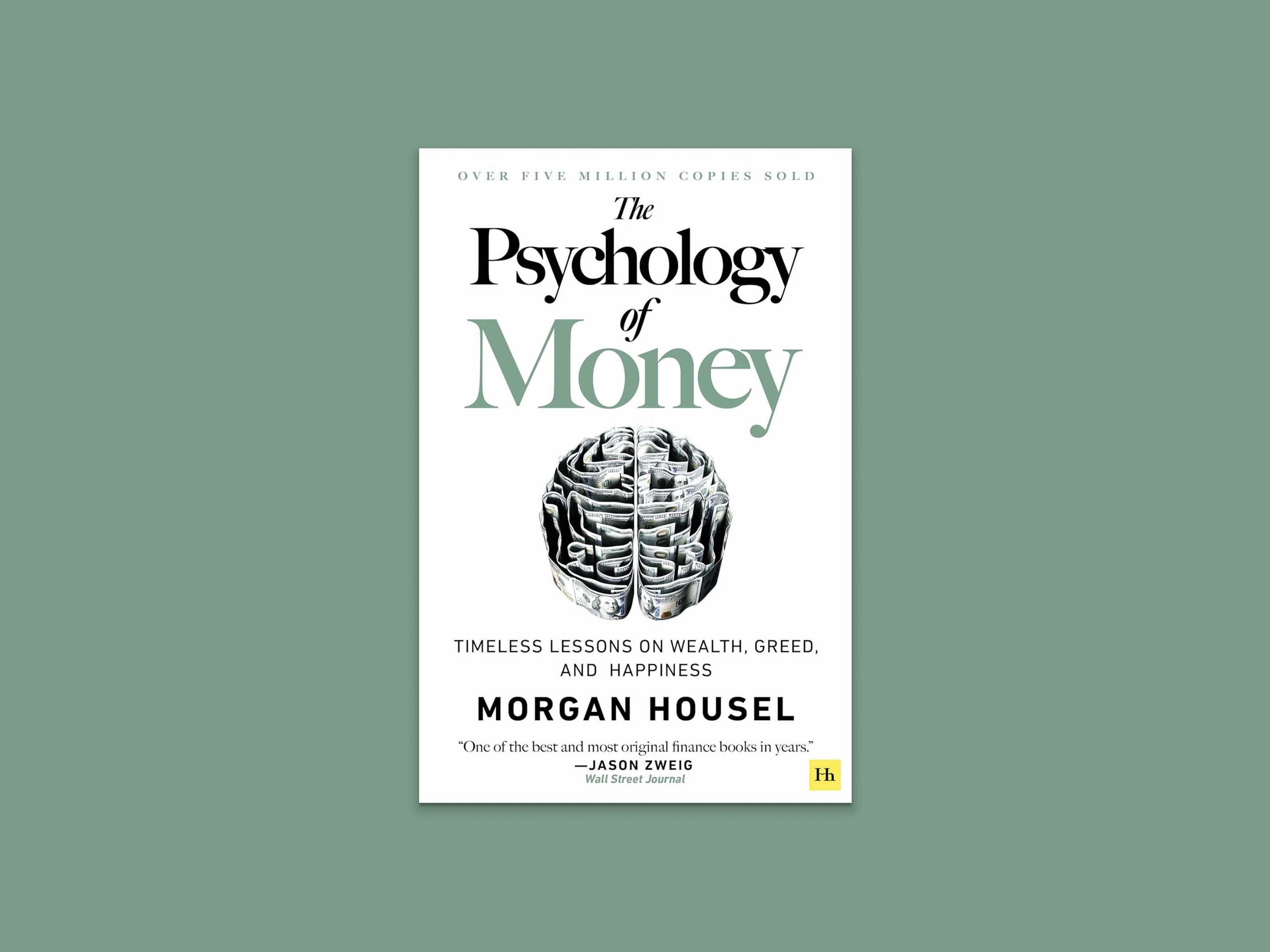
The Psychology of Money reminds us that financial choices are not only rational decisions. They are about how we think and feel. For designers that is a useful lesson. Both money and creative work ask for a long view, the courage to live with uncertainty, and the ability to stay with what actually gives value over time.
Inspired by the book The Psychology of Money, and the author: https://www.morganhousel.com