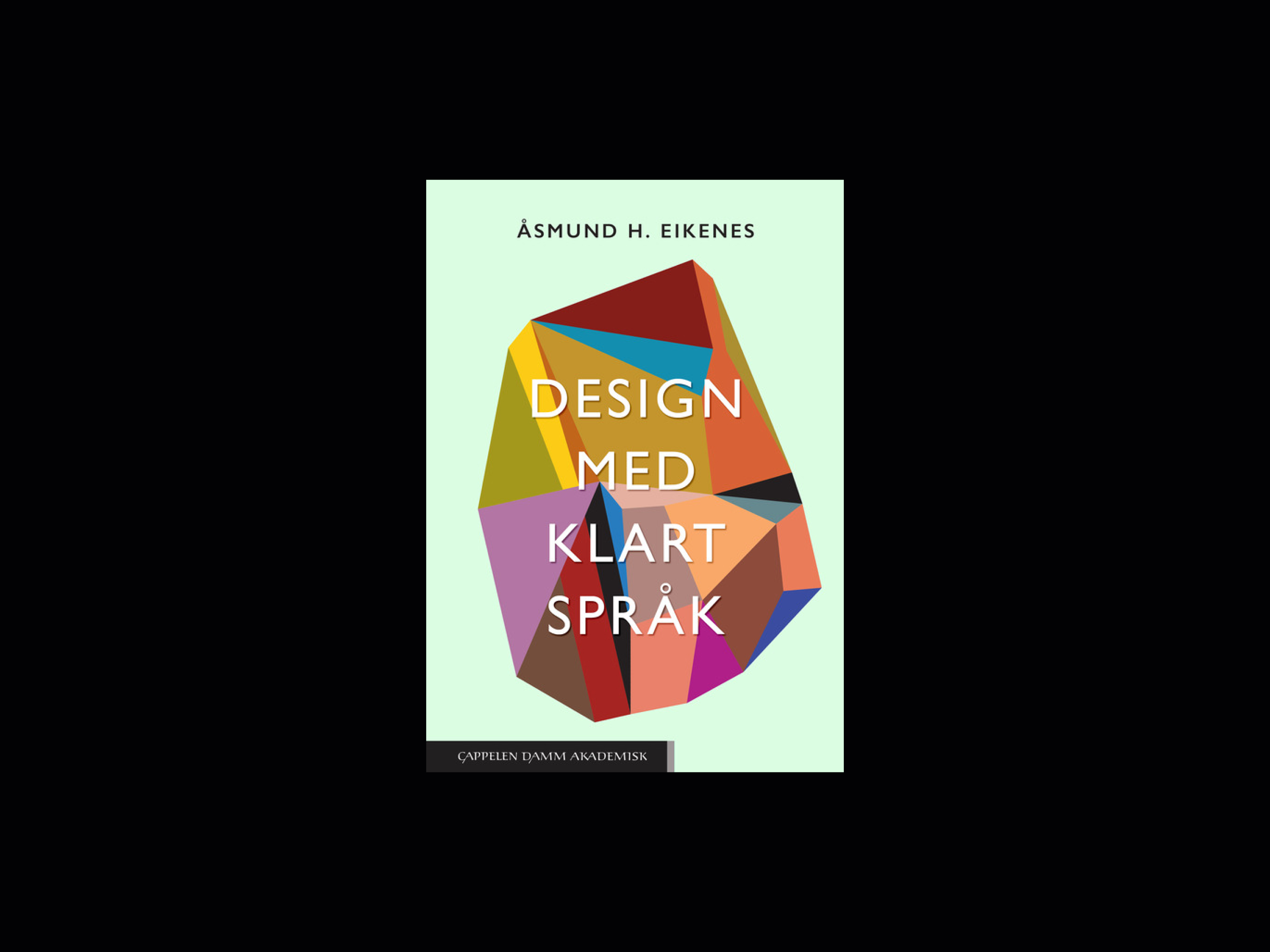
This is not a book only for content people and writers. It is a book for you as a designer, if you want to make solutions people actually understand and can use.
“Innholdsdesign er å bruke klart språk som verktøy i designprosesser for å avdekke og presisere hva som er kjernen i en tjeneste eller et produkt.”
– Åsmund H. Eikenes
Design is more than appearance
We know this. Design is not only how something looks. It is how it works. If the user does not understand what to do, why it matters, or what happens next, even a polished design fails.
That is why plain language and clear content are as much a part of the design process as the visual.
Five tools to keep in the box
Eikenes names five concrete moves that help you use language as a design tool:
Verbs. Use action verbs so it is clear what the user should do.
Sorting with language. Organise information so it has structure and an overview.
Facilitation with language. Use plain language in workshops, for a better flow and better insight.
Stories. Make small narratives in the content, to engage and to lead.
Writing. Write text that is easy to understand and helps the user take the next step.
These tools are useful in websites, forms, apps and complex systems.
How to use the book in practice
Think about content early. Do not wait until “afterwards”. Good text is not something you add. It is something you build with.
Work with writers. Or become a better writer yourself. It is about collaboration and respect for each other's craft.
Prototype with real text. Avoid lorem ipsum. Try to write what should actually stand there.
Test the text, not only the design. Ask people what they understand, what is unclear, and what stops them.
In short
Design med klart språk helps you see text as an integrated part of the design, not as decoration or as something to do later. It strengthens you as a designer, and it makes you better equipped to make services that actually work for people.
You can find the book here: Design med klart språk – Cappelen Damm