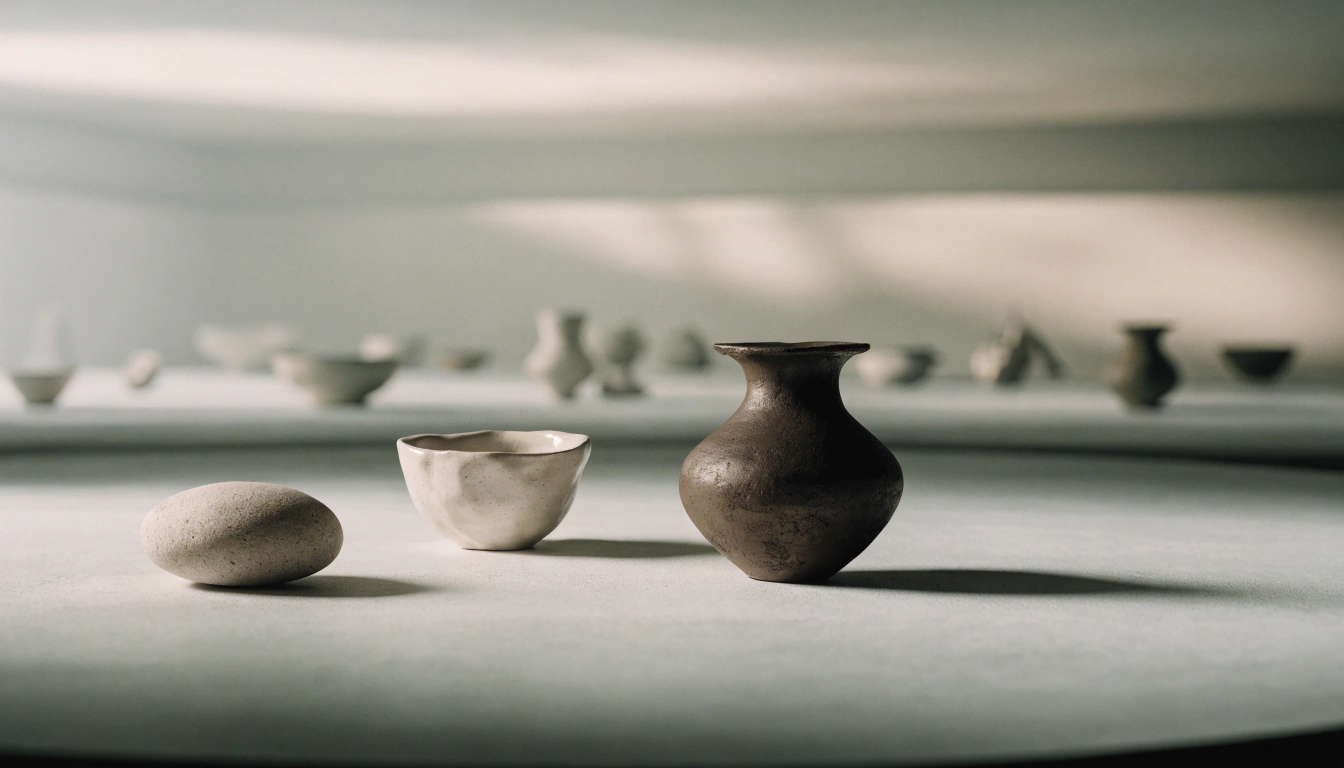
What it means to be a curator
To curate is to choose with care. It means seeing the whole, and knowing which details are needed for the experience to mean something. For me, curation is more than aesthetics. It is understanding what gives the user value, and what can be set aside so the experience stays natural.
• Curation means lifting what matters and leaving out what distracts.
• I try to see the design from the user's side: what they need, and what they want from the experience.
• As a curator I have to trust my own feeling and my own choices, so the design has depth and credibility.
Feelings in design make the experience
Design is more than information. It is an experience that creates feelings, and those feelings change how the solution is read. A large part of my job is to avoid negative feelings such as confusion, frustration or stress. Positive feelings are not required for a solution to work. They add value, and they can strengthen the tie to the product.
• Avoiding frustration and confusion is essential.
• Positive feelings and associations are an advantage. They can create loyalty and pleasure.
• A good design meets the user's needs and feelings, on more than one level.
Intuition as a compass
Data gives us insight. As a designer I also have to trust the gut. Sometimes intuition is the compass for a choice that does not only look right on paper, but feels right. Intuition opens for solutions with a human dimension.
• Intuition helps me make choices that are both logical and emotional.
• Trusting the gut makes room for an experience that is genuine and particular.
• My design choices feel right because I trust my own feeling and my own experience.
Technology and AI, in service of the experience
Technology offers a lot, and the tools have to support the experience, not complicate it. AI can offer insight and suggestions. It is still the designer's role to curate, so the result feels right and human.
• I use technology and AI tools that strengthen the experience without taking it over.
• Technology has to be a help that makes sense to the person using it.
• Curating with AI means keeping the experience relevant and intuitive.
Practical principles
A good curator creates clarity and structure. When I design, I choose elements that make the journey easier to understand, and I remove what does not add value.
• Curation means choosing what matters and fitting the experience to the user.
• The design should be intuitive and easy to move through.
• I use my own intuition and experience so the result feels right.
Why curation matters in design
When I focus on curation, I can give the user a clear path without overwhelming them. The design becomes more engaging and easier to use. For me, curation is the core of good design. It is about making something that supports the experience.
• Curation gives clarity and makes the experience whole.
• A curator’s approach makes design that is meaningful and engaging.
• I use curation to make an experience that feels human and relevant.
In short
To be a designer and a curator is to choose what matters most in a world full of options. With feeling, intuition and deliberate use of technology, including AI, I try to make experiences with a meaning that lasts. A good curator-designer removes what is unnecessary, lifts what is essential, and makes an experience that feels right, now and later.
Sources: my own head, AI, The Creative Act: A Way of Being by Rick Rubin, and Argh, design and psychology.
Content curator: Stig Taftø.