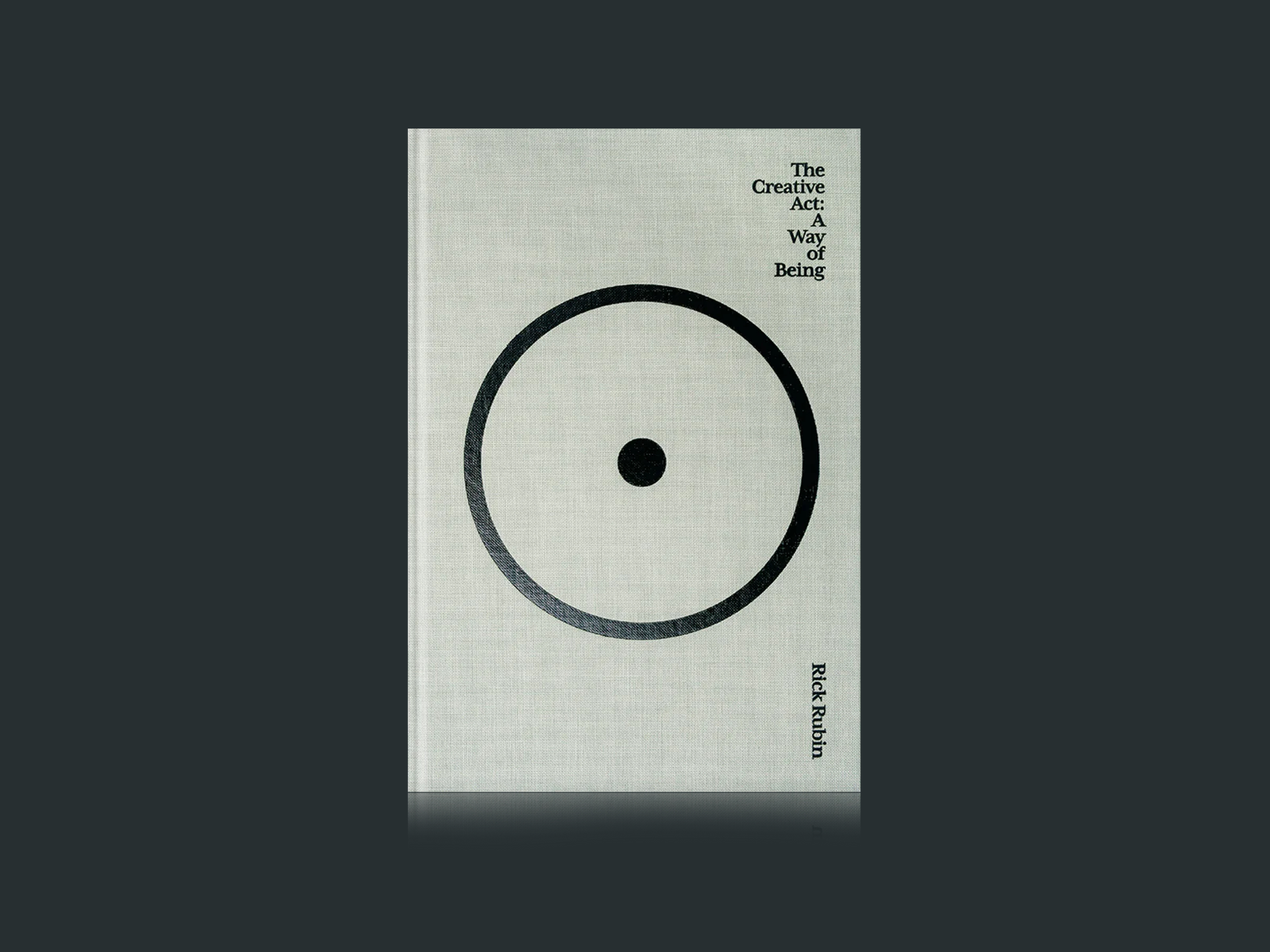
Why this book is relevant
Rubin shares insight from decades in the music business, working with superstars and with new talent. The book is not only for musicians. It is for anyone who wants to understand and practise creativity, in design, art, writing or building a company.
Below is a short summary, and the lessons I kept.
A summary of The Creative Act: A Way of Being
Rick Rubin argues that creativity is not a particular product. It is a state of openness. That state asks us to stay receptive to the unknown, to loosen our grip, and to let ideas have room. He gives examples of how to get there through calm, self-reflection, and trust in your own intuition.
Rubin challenges the idea that creativity is an isolated talent. He argues that it is available to everyone. Instead of seeing ideas as something we have to invent, he invites us to imagine that the ideas already exist around us, and that our job is to tune the receiver so we can pick them up.
He also stresses a meditative practice. When the mind is quieter, there is room for ideas to surface. The book offers tools and exercises: journaling, time alone in silence, or simply paying more attention when a new thought appears.
Lessons from the book
1. Creativity is a state, not a product
Rubin argues that creativity comes from a way of being, a way of living and thinking. If we practise staying open to impressions, new ideas and chance, we raise the chance of making work that means something.
2. Intuition as a compass
Instead of over-analysing, listen to the gut when you judge an idea. Daring to trust intuition often leads to results that are more original and more true.
3. Make a receptive atmosphere
The atmosphere around us affects the work directly. Rubin recommends quiet moments, walks in nature, and a tidy, inspiring place to work, so the head can drop unnecessary noise.
4. Stay open to mistakes and to chance
Many large discoveries happen by accident, or by “mistake”. Rubin asks us to see those situations as openings, not as obstacles.
5. Prioritise play and curiosity
Creative processes are often driven by a playful, exploring attitude. Ask questions, look for new knowledge, and experiment without the fear of failing.
6. Find, or make, your creative community
Inner work matters. So does being around people who support you and understand what you are trying to do. Share ideas, ask for feedback, and build a network that holds.
7. A quiet mind leads to clarity
Rubin puts a lot of weight on mental calm as a foundation for good ideas. Meditation, reflection and pauses from the daily noise make it easier to see solutions we would otherwise miss.
Conclusion
The Creative Act: A Way of Being is a source of inspiration for anyone who wants to develop their creative potential. By focusing on presence, openness and curiosity, we make better conditions for the work, whatever field we are in.
Rubin's philosophy is a reminder that creativity is not reserved for a few. It is available to anyone who takes the time to listen, receive and explore. Take the principles into your own work, and be ready to be surprised by how rich the creative path can be.